The Role of Virtual Reality and Augmented Reality in Manufacturing
In today’s rapidly evolving industrial landscape, emerging technologies like Virtual Reality (VR) and Augmented Reality (AR) are playing a transformative role in modern manufacturing. As companies pursue digital transformation and seek to optimize productivity, efficiency, and workforce readiness, VR and AR offer powerful tools for visualization, simulation, training, and real-time decision-making.
What Are VR and AR?
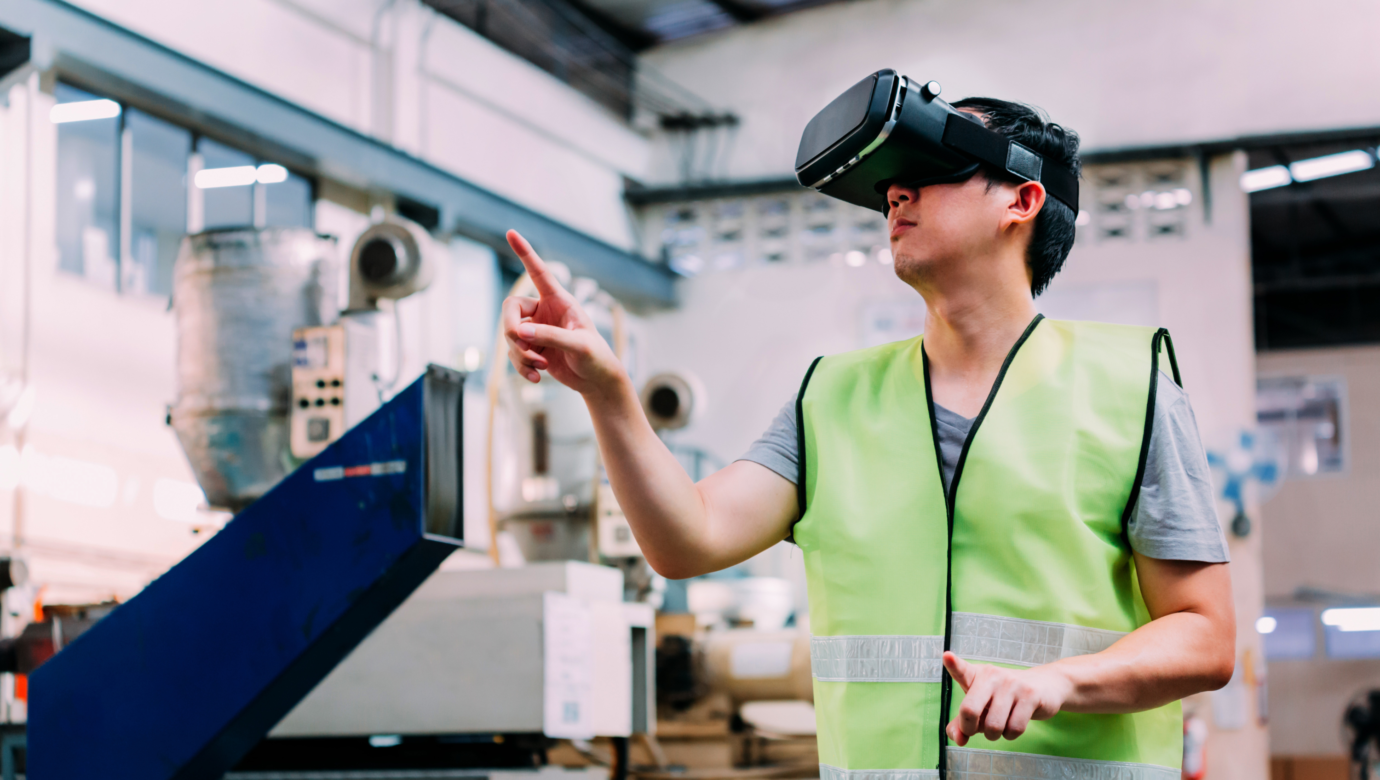
Virtual Reality (VR) immerses users in a fully digital environment, typically experienced through a headset. It enables manufacturers to simulate processes, environments, or machinery in a risk-free digital space.
Augmented Reality (AR) overlays digital content—like 3D models, instructions, or real-time data—onto the physical world, usually through mobile devices, smart glasses, or headsets like the Microsoft HoloLens. Unlike VR, AR enhances rather than replaces the real-world environment.
Together, these technologies are key components of Industry 4.0, supporting data-driven decision-making, reducing downtime, and bridging the gap between digital design and physical production.
Applications of VR and AR in Manufacturing
1. Immersive Workforce Training
VR enables manufacturers to create realistic simulations for training purposes—ideal for preparing new employees or upskilling existing workers. For example, operators can learn how to work with complex machinery in a safe, controlled environment before ever setting foot on the production floor.
AR further enhances training by providing contextual, step-by-step visual guidance directly within the user’s field of view, accelerating learning curves and reducing human error.
2. Design and Prototyping
Virtual environments allow engineers to visualize and test product designs in 3D before physical prototyping. With VR, design teams can conduct immersive design reviews, evaluate ergonomics, and simulate real-world performance—all of which shortens design cycles and supports more agile development.
AR can be used on the shop floor to project digital prototypes into physical space, enabling collaboration between engineering and production teams to validate manufacturability and assembly.
3. Maintenance and Field Support
AR-assisted maintenance provides technicians with digital overlays of instructions, part locations, or real-time sensor data while working on equipment. This reduces reliance on printed manuals or remote support calls, minimizes downtime, and ensures consistency across maintenance tasks.
Some manufacturers use AR headsets connected to remote experts, enabling real-time guidance and troubleshooting from off-site support teams—a valuable application for distributed facilities or limited in-house expertise.
4. Assembly and Quality Assurance
By overlaying work instructions and quality checklists directly into an operator’s view, AR ensures that complex assembly tasks are performed correctly and consistently. Operators can receive instant feedback, flag issues, or confirm part alignments—improving both speed and accuracy.
For quality assurance, AR tools can assist in identifying defects or deviations from design specifications by comparing real-time scans to digital models.
Benefits of VR and AR in Manufacturing
- Improved safety: Simulated environments allow for risk-free training and testing.
- Faster onboarding: Workers reach competency quicker with immersive and guided learning tools.
- Reduced errors: Real-time instructions and digital overlays minimize human error in assembly and maintenance.
- Lower costs: Virtual prototyping reduces material waste and accelerates time-to-market.
- Increased uptime: AR support tools streamline maintenance and troubleshooting processes.
Overcoming Implementation Challenges
While the benefits are significant, implementation of VR and AR in manufacturing isn’t without challenges. These include:
- Hardware costs and scalability
- Integration with legacy systems and data
- User adoption and training
- Data security and IT/OT alignment
To overcome these barriers, manufacturers must approach deployment with a clear strategy—starting with use case definition, piloting with targeted teams, and scaling through structured workforce development.
Final Thoughts
As the manufacturing sector embraces digital transformation, Virtual Reality and Augmented Reality are no longer futuristic concepts—they are practical tools reshaping how products are designed, assembled, and maintained. By investing in these technologies and preparing the workforce to use them effectively, manufacturers can unlock new levels of productivity, agility, and innovation.
Want to explore how VR and AR could benefit your operations or workforce?
Connect with the Digital Foundry today: https://digitalfoundrynk.com/contact